Introduction
If you’ve been researching skincare ingredients for acne, acne scars, wrinkles, or anti-ageing, you’ve probably encountered both tretinoin and retinol.
While these ingredients are closely related, they are not the same.
Many people wonder:
- Is tretinoin better than retinol?
- Which one works faster?
- Which one is better for acne?
- Which one causes fewer side effects?
In this guide, we’ll compare tretinoin and retinol side-by-side to help you decide which option may be most suitable for your skincare goals.
Quick Answer
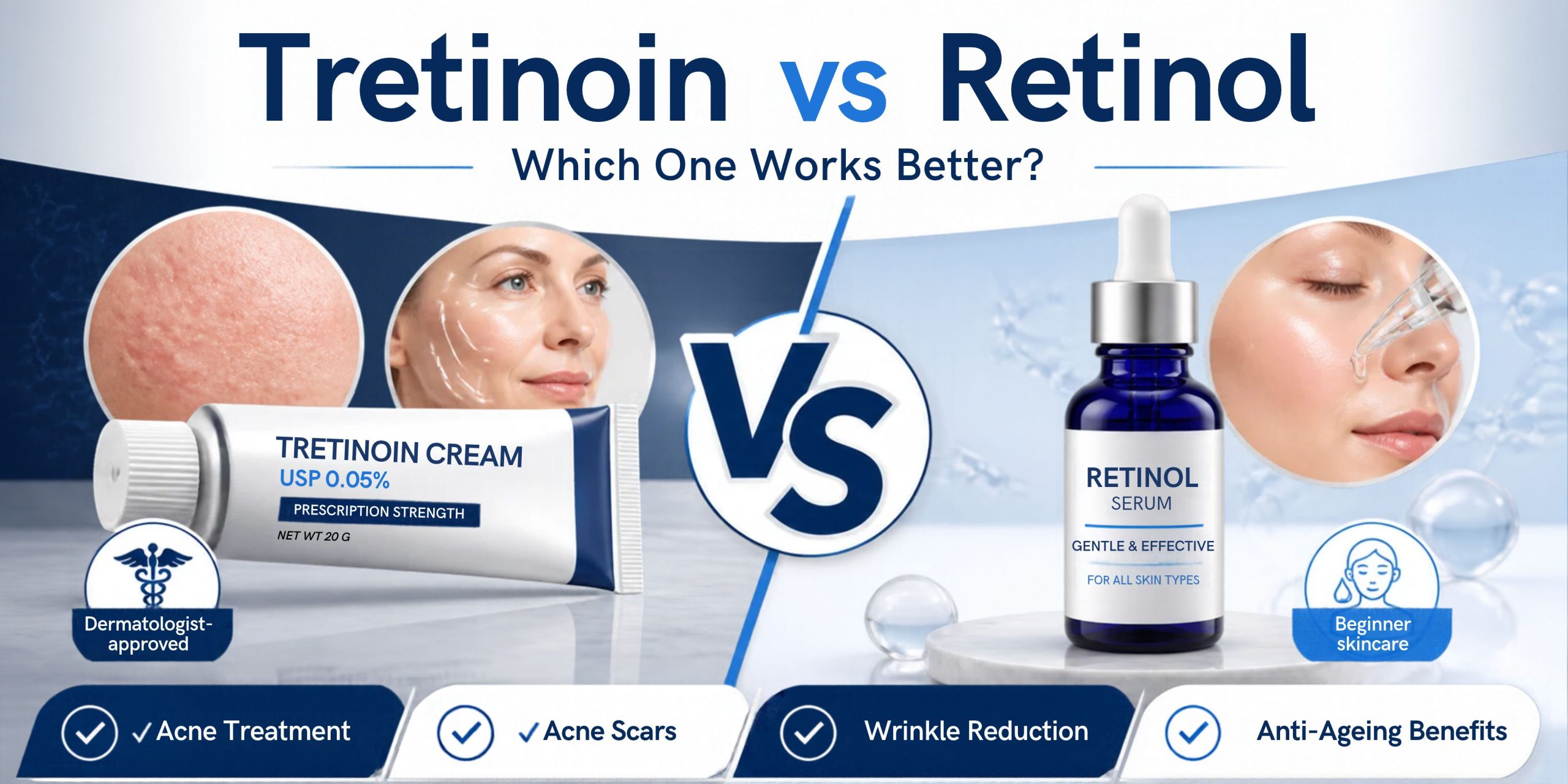
Tretinoin and retinol are both vitamin A derivatives known as retinoids.
The biggest difference is that tretinoin is already in its active form, allowing it to work directly within the skin, while retinol must first be converted by the skin into active retinoic acid.
As a result, tretinoin is generally stronger and produces faster results than retinol, although it may also cause more irritation.
For users seeking prescription-strength results, products such as Tretin 0.025 Cream are often chosen for acne treatment, skin renewal, and anti-ageing benefits.
What Is Retinol?
Retinol is a vitamin A derivative commonly found in over-the-counter skincare products.
It is frequently used to improve:
- Fine lines
- Wrinkles
- Skin texture
- Mild acne
- Uneven skin tone
Because retinol requires conversion within the skin before becoming active, it tends to be gentler but slower acting.
What Is Tretinoin?
Tretinoin is a prescription-strength retinoid derived from vitamin A.
It is commonly used for:
- Acne
- Acne scars
- Hyperpigmentation
- Fine lines
- Wrinkles
- Photoaged skin
Because tretinoin is already biologically active, the skin can use it immediately without requiring conversion.
Tretinoin vs Retinol: Comparison Table
| Feature | Tretinoin | Retinol |
|---|---|---|
| Strength | Higher | Lower |
| Prescription Required | Often Yes | No |
| Works Faster | ✅ | ❌ |
| Acne Treatment | ✅ Excellent | ⚠️ Mild |
| Acne Scars | ✅ Effective | Mild |
| Wrinkle Reduction | ✅ Strong | Moderate |
| Irritation Potential | Higher | Lower |
| Suitable for Beginners | Moderate | Excellent |
| Time to Results | 6-12 Weeks | 12-24 Weeks |
Which Works Better for Acne?
For acne management, tretinoin is generally considered more effective.
Benefits include:
- Unclogging pores
- Reducing blackheads
- Preventing new breakouts
- Improving post-acne marks
Many dermatologists recommend tretinoin as a first-line topical treatment for acne vulgaris.
Which Works Better for Acne Scars?
Acne scar improvement depends largely on increased collagen production and skin renewal.
Tretinoin tends to outperform retinol because of:
- Greater potency
- Faster cellular turnover
- Stronger collagen stimulation
Individuals looking to improve post-acne pigmentation frequently start with tretinoin-based treatments.
Which Works Better for Wrinkles?
Both ingredients can improve:
- Fine lines
- Skin texture
- Elasticity
However, clinical studies have consistently demonstrated stronger wrinkle reduction with tretinoin compared to retinol.
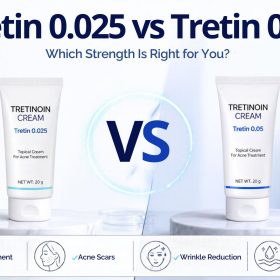
A stronger composition other than Tretin 0.025% cream is Tretin 0.05 Cream
Side Effects: Tretinoin vs Retinol
Common Tretinoin Side Effects
- Dryness
- Peeling
- Redness
- Irritation
- Purging
Common Retinol Side Effects
- Mild dryness
- Occasional redness
- Temporary irritation
Because retinol is less potent, it is generally easier for beginners to tolerate.
Can You Start With Retinol and Move to Tretinoin?
Yes.
Many people use retinol before transitioning to stronger formulations such as:
- Tretin 0.025
- Tretin 0.05
- Tretin 0.1 Cream
This gradual progression allows the skin to build tolerance while reducing irritation.
Who Should Choose Retinol?
Retinol may be suitable for:
- Beginners
- Sensitive skin
- Maintenance routines
- Mild ageing concerns
Who Should Choose Tretinoin?
Tretinoin may be suitable for:
- Moderate acne
- Acne scars
- Hyperpigmentation
- More visible wrinkles
- Users seeking stronger results
Frequently Asked Questions
Is tretinoin stronger than retinol?
Yes. Tretinoin is significantly stronger because it is already in its active form and does not require conversion by the skin.
Does tretinoin work faster than retinol?
Yes. Most users notice visible improvements sooner with tretinoin compared to retinol.
Can retinol remove acne scars?
Retinol may improve mild skin texture concerns, but tretinoin is generally considered more effective for acne scars.
Which causes more irritation?
Tretinoin typically causes more dryness, peeling, and irritation during the adjustment period.
Can I use retinol and tretinoin together?
Most users should avoid using both simultaneously unless advised by a healthcare professional.
Medical Disclaimer
This article is for informational and educational purposes only and should not be considered medical advice. Retinoid treatments affect individuals differently. Always consult a qualified healthcare professional or dermatologist before starting, changing, or discontinuing any skincare or medical treatment.
Conclusion
Both retinol and tretinoin offer significant skincare benefits, but they serve different purposes.
Retinol provides a gentler introduction to retinoid therapy, while tretinoin delivers stronger and faster results for acne, acne scars, wrinkles, and skin renewal.
For individuals seeking prescription-strength retinoid treatment, Tretin 0.025 Cream, Tretin 0.05 Cream, and Tretin 0.1 Cream remain among the most widely used options for long-term skin improvement.